Title
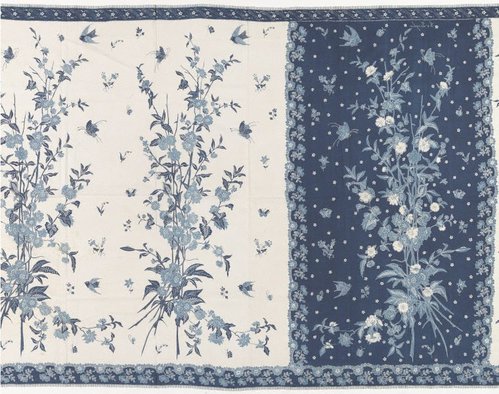
Skirt cloth (kain sarong) with flower and butterfly design
circa 1890-1946
Artist

-
Details
- Other Titles
- Batik tulis kain panjang (skirtcloth)
Piece of skirtcloth ('kain panjang') with flower and butterfly design - Place where the work was made
-
Pekalongan
→
Central Java
→
Java
→
Indonesia
- Cultural origin
- Eurasian
- Date
- circa 1890-1946
- Media category
- Textile
- Materials used
- cotton, dyes; batik
- Dimensions
- 106.0 x 196.0 cm
- Signature & date
Signed embroided "Eliza van Zuylen". Not dated.
- Credit
- Gift of Dr John Yu 1998
- Location
- Not on display
- Accession number
- 120.1998
- Copyright
- Artist information
-
Eliza van Zuylen workshop
Works in the collection
- Share
-


-
About
Of all the textiles of Southeast Asia, the influence of Europe is most dramatic and direct on certain categories of batik made in Java during the late 19th and early 20th centuries. During this period Dutch and Eurasian women, referred to as 'Indische' played an innovative role in batik production along the north coast of Java. Their influence extended from their choice of patterns and colours through to their actual entrepreneurial involvement in the establishment of batik workshops. One of the longest lasting and most famous of these ateliers was directed by Eliza van Zuylen whose workshop operated in Pekalongan from 1890-1946. With the influence of European tastes, traditional batik patterns gave way to patterns of flowers, plant motifs and birds reminiscent of Indian chintz patterns. Eliza van Zuylen's batiks were designed for the western export market as well as for the local 'Indische'. This piece with designs of floral bouquets or "buketan", birds and butterflies in various shades of blues and greys, would have been worn as a hip or waist wrapper.
-
Exhibition history
Shown in 2 exhibitions
Symbols and Ceremonies: Indonesian Textile Traditions, Art Gallery of New South Wales, Sydney, 13 Apr 2006–28 May 2006
Correspondence, Art Gallery of New South Wales, Sydney, 10 Sep 2022–2024
-
Provenance
John Yu, pre 1998, Sydney/New South Wales/Australia, purchased in Indonesia. Donated to the Art Gallery of New South Wales, Sydney, June 1998.