Title
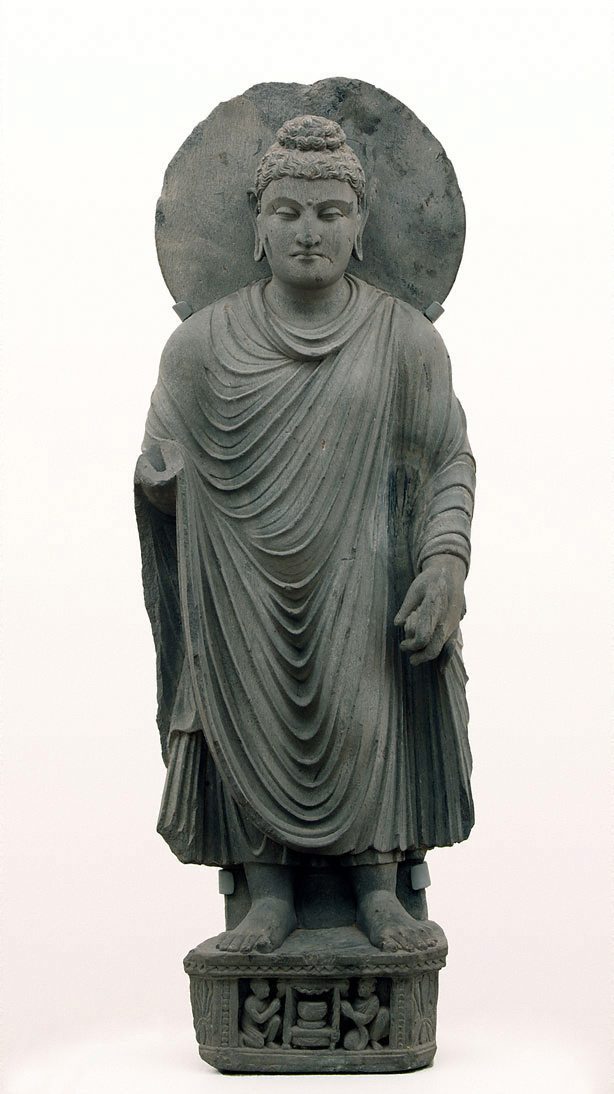
Standing Buddha
2nd century
Artists
Unknown Artist



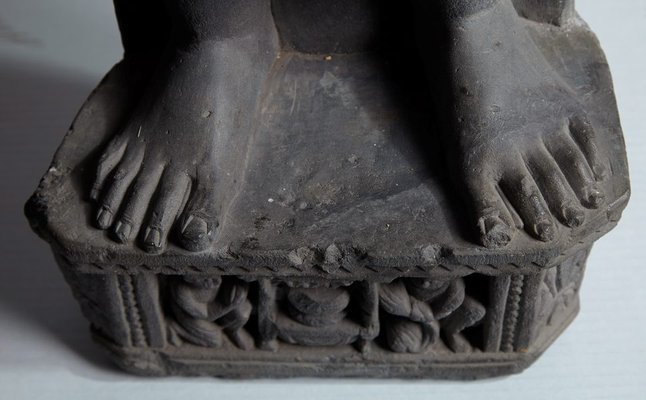

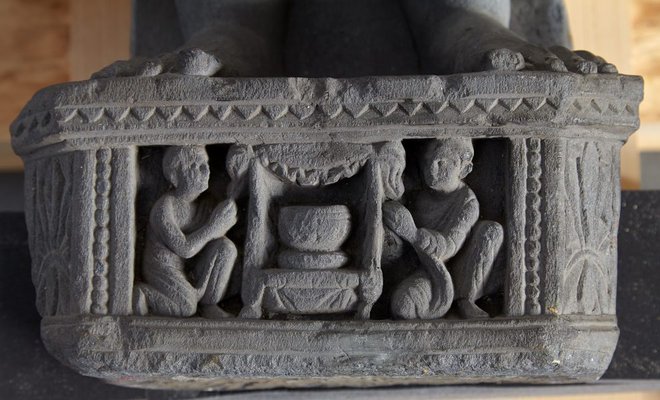
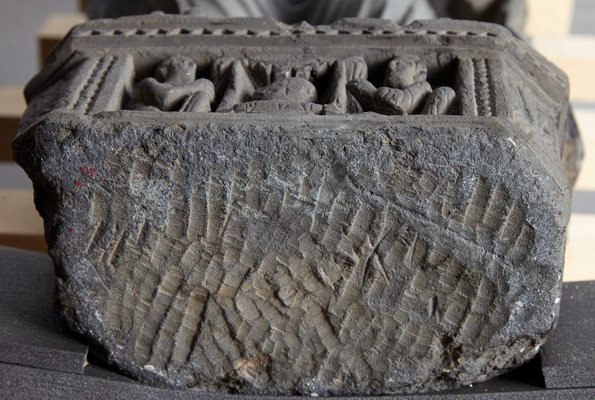
-
Details
- Other Title
- Figure of Buddha
- Places where the work was made
-
Ancient Gandhara
→
Pakistan
Ancient Gandhara → Afghanistan
- Period
- Kushan period mid 1st century - early 5th century
- Date
- 2nd century
- Media category
- Sculpture
- Materials used
- schist
- Dimensions
- 109.0 x 37.0 x 17.0 cm
- Signature & date
Not signed. Not dated.
- Credit
- Gift of Josef and Regina Neumann 1986
- Location
- South Building, lower level 1, Asian Lantern galleries
- Accession number
- 85.1986
- Copyright
- Share
-


-
About
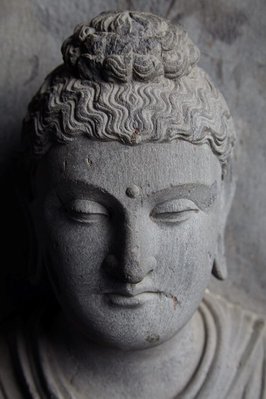
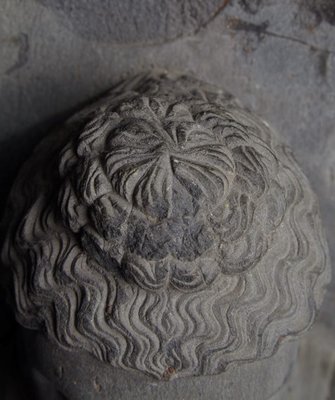
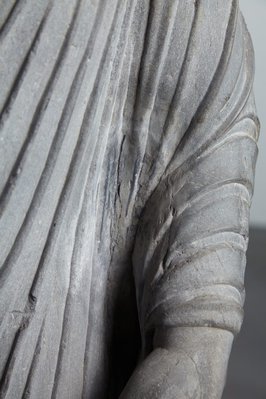
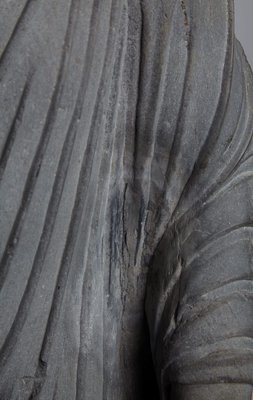
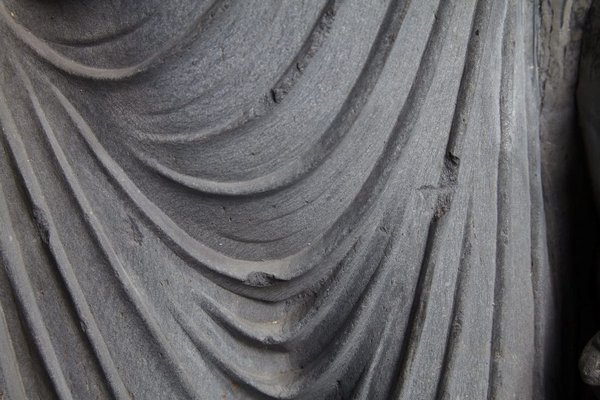
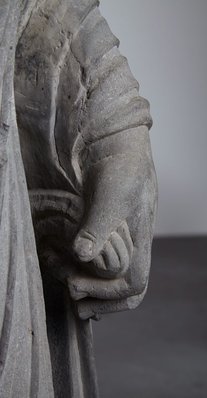
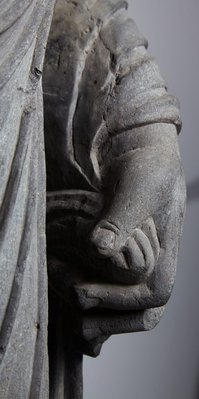
The Buddha was originally shown only by symbols, such as the stupa, the wheel of the Doctrine or a footprint. It was the Gandhara area of northwest India that gave rise to the first representations of the Buddha in human form in the 2nd century BCE. This standing figure shows a Greco-Roman influence in its classical facial features and the drapery-like folds of the robe. The left hand grasps a corner of the robe while the right hand would have faced palm out and fingers upright in the 'abhaya mudra' (gesture of fearlessness). Typical of the Gandharan Buddha is the naturalistic hairstyle, the rounded cranial bump or ushnisha (indicating wisdom), and the spiral between the eyebrows (urna) signifying spiritual insight.
Asian Art Department, AGNSW, August 1995
-
Exhibition history
Shown in 5 exhibitions
Fine Chinese ceramics, bronzes, jades, sculpture and works of art, Christie's New York, New York, 27 Nov 1985–01 Dec 1985
Buddhist Art from the Collection of the Art Gallery of New South Wales, Art Gallery of New South Wales, Sydney, 06 May 1995–10 Sep 1995
Conversations through the Asian collections, Art Gallery of New South Wales, Sydney, 25 Oct 2014–13 Mar 2016
Walking with gods, Art Gallery of New South Wales, Sydney, 01 Jun 2019–05 Jan 2020
Elemental, Art Gallery of New South Wales, Sydney, 30 Jul 2022–2024
-
Bibliography
Referenced in 3 publications
-
Christie's New York, Christie's New York: Fine Chinese ceramics, bronzes, jades, sculpture and works of art, New York, 02 Dec 1985, 110,111 (colour illus.). lot 206.
-
Jackie Menzies, Asian Collection Handbook, Art Gallery of New South Wales, 'Introduction', pg. 9-17, Sydney, 1990, 10, 11 (illus.).
-
Jackie Menzies (Editor), The Asian Collections Art Gallery of New South Wales, 'Buddhist Art', Sydney, 2003, 28 (colour illus.).
-
-
Provenance
Josef Newman, pre Dec 1985, Sydney/New South Wales/Australia, donated to the Art Gallery of New South Wales, Sydney, 1986.